
The EGR valve is part of the exhaust gas recirculation system. Its purpose is to return part of the exhaust gases back into the intake system, thereby reducing combustion temperature and harmful nitrogen oxide emissions.
This system is most commonly used in diesel vehicles and some petrol vehicles. Although EGR helps reduce emissions, during operation the system can become contaminated with soot, oil vapors, and other deposits. As a result, the EGR valve may start to stick, fail to close properly, or operate incorrectly.
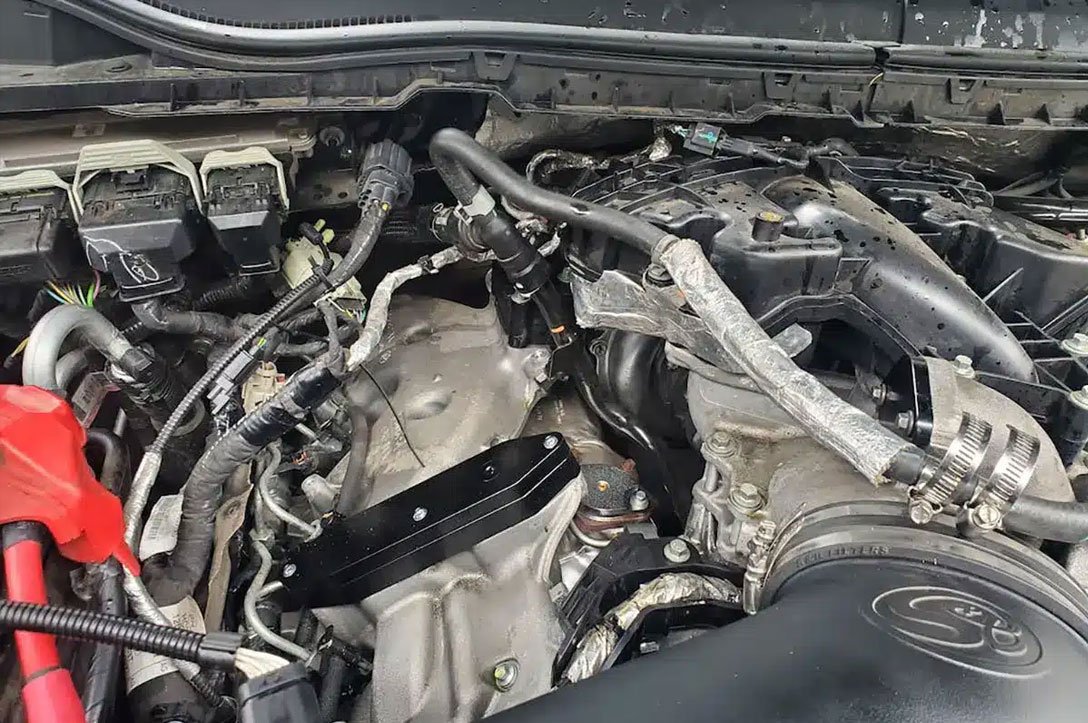
A malfunctioning EGR valve can affect engine operation, power, fuel consumption, and other vehicle systems. EGR faults are often confused with turbocharger, injector, DPF, or air intake problems, which is why accurate diagnostics are very important.
The most common signs of EGR failure include:
If you notice these symptoms, it is recommended not to delay and to have the EGR system checked.
The EGR valve operates under difficult conditions – hot exhaust gases, soot, and combustion by-products circulate through it. Over time, these deposits accumulate on the valve, intake manifold, and related channels.
The most common causes of EGR problems include:
An EGR fault can cause more soot to build up in the engine, intake manifold, valves, injectors, and DPF filter. Therefore, the problem often affects not just one system, but several interconnected systems.
After diagnostics, the most suitable solution can be selected based on the vehicle’s condition, the EGR system design, and the nature of the fault.
1. EGR Valve Cleaning
In some cases, if the EGR valve is not mechanically damaged, it can be cleaned. This may be a suitable solution when the problem is caused by the accumulation of deposits or soot.
However, it is important to understand that cleaning does not always solve the problem long-term. If the valve has an electronic component fault or is heavily worn, cleaning may only be a temporary solution.
2. EGR Valve Replacement
If the EGR valve is mechanically faulty or its electronic component no longer operates properly, replacement may be required. This is the factory-standard solution, but its cost depends on the vehicle model and the EGR system design.
3. EGR System Software Work
In some cases, EGR system software work may be required: fault analysis, control logic checking, adaptations, or ECU software corrections. Such work must be carried out responsibly, using professional equipment and in compliance with applicable technical and legal requirements.
The EGR system is closely linked to air intake, fuel mixture control, the turbocharger, the DPF filter, and the engine control unit. Therefore, simply reading the fault code often does not reveal the full problem.
When performing EGR diagnostics, it is important to assess:
Only after comprehensive diagnostics can it be accurately determined whether the problem is truly related to the EGR system or caused by another part of the engine management system.
At Diagnet™, we handle EGR system faults responsibly. First, we perform diagnostics, evaluate the vehicle’s real operating parameters, and identify the exact cause of the fault.
Our goal is not only to remove the fault from the control unit, but also to understand why it occurred. This helps prevent recurring faults and unnecessary expenses.
We perform:
If your vehicle has lost power, started running unevenly, produces more smoke, fuel consumption has increased, or the “Check Engine” light has come on – it is worth checking the EGR system.
Contact Diagnet™ at info@diagnet.lt – we will perform diagnostics, identify the cause of the fault, and offer the most suitable solution for your vehicle.